Enterprise AI Roadmaps and Physical AI Highlights at TechEx
The second day of TechEx delivered a powerful look into how enterprise AI roadmaps are shaping the future of digital transformation. Industry leaders, technology innovators, and enterprise decision makers gathered to discuss the growing impact of artificial intelligence across industries. From advanced automation systems to physical AI integration, the event highlighted how businesses are accelerating innovation while addressing security, governance, and scalability challenges.
As organizations continue investing in intelligent systems, enterprise AI roadmaps have become essential for long term growth. Companies are no longer experimenting with isolated AI projects. Instead, they are building structured frameworks that connect data, automation, analytics, and infrastructure into a unified ecosystem. Consequently, the discussions at TechEx reflected the increasing demand for sustainable and secure AI adoption strategies.
Enterprise AI Roadmaps Driving Digital Transformation
One of the major themes at TechEx focused on the importance of enterprise AI roadmaps in modern business environments. Experts emphasized that successful AI deployment requires clear planning, cross functional collaboration, and scalable infrastructure. Businesses are now prioritizing AI integration across operations, customer engagement, and predictive analytics to improve efficiency and competitiveness.
Moreover, enterprise AI roadmaps are helping organizations align innovation with business goals. Instead of chasing trends, companies are adopting phased implementation strategies that support measurable growth. This shift is especially important as AI trends and insights continue evolving at a rapid pace.
Speakers also discussed the role of machine learning advancements in enabling smarter enterprise systems. Intelligent automation platforms are becoming more adaptive, allowing businesses to analyze massive datasets and make faster decisions. As a result, enterprises are improving operational accuracy while reducing repetitive manual processes.
Physical AI Expanding Beyond Traditional Automation
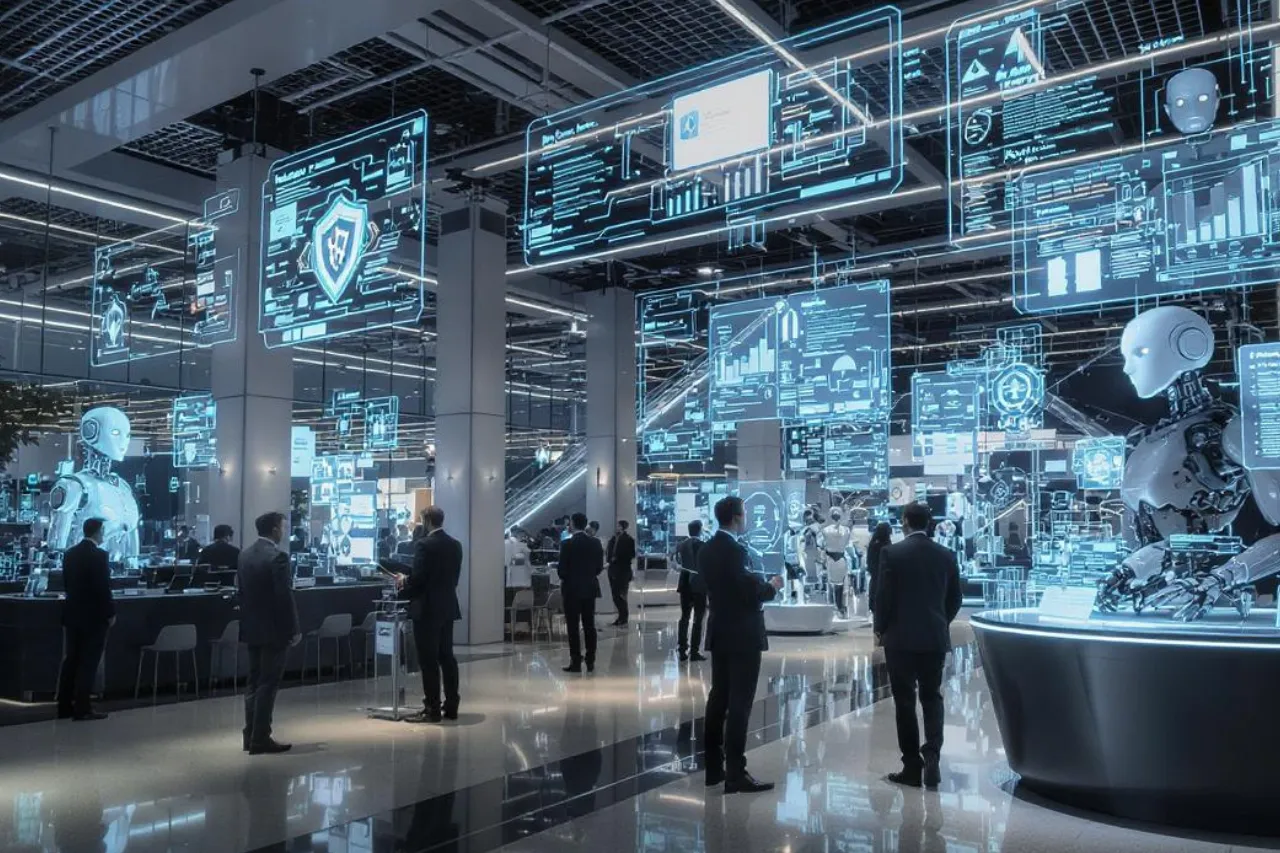
Another standout topic during the event was the rapid rise of physical AI technologies. Unlike traditional software based automation, physical AI combines robotics, sensors, computer vision, and intelligent systems to interact with real world environments. This area is quickly becoming a critical component of enterprise AI roadmaps.
Industry experts showcased how physical AI is transforming manufacturing, logistics, healthcare, and smart infrastructure. Robots equipped with AI powered perception systems are now capable of handling complex tasks with greater precision and adaptability. Furthermore, businesses are integrating automation and future tech solutions into warehouses, factories, and customer service operations.
The growing demand for physical AI also reflects broader generative AI developments across industries. Companies are combining generative models with robotics to improve autonomous decision making and real time problem solving. Consequently, enterprises are entering a new era where intelligent machines can collaborate more effectively with human workers.
Security Challenges Continue to Shape AI Adoption
While innovation remained a central focus at TechEx, cybersecurity concerns dominated several enterprise discussions. As organizations expand AI capabilities, they are also facing increasing risks related to data privacy, compliance, and system vulnerabilities. Therefore, security is becoming one of the most critical pillars of enterprise AI roadmaps.
Experts explained that enterprises must establish strong governance frameworks to ensure responsible AI deployment. Security teams are now working closely with AI developers to build systems that are transparent, compliant, and resilient against evolving cyber threats. In addition, organizations are investing heavily in secure cloud infrastructure and real time threat detection technologies.
The conversations also highlighted how AI industry updates are influencing regulatory discussions worldwide. Governments and enterprise leaders are recognizing the need for ethical AI standards that balance innovation with accountability. As AI adoption accelerates, businesses must maintain trust by implementing secure and explainable AI systems.
Generative AI Developments Reshaping Enterprise Strategies
Generative AI developments continued to attract major attention throughout TechEx Day Two. Businesses across sectors are exploring how generative AI can improve content creation, customer interactions, software development, and workflow automation. However, experts stressed that enterprises need structured AI governance to manage risks associated with large language models and synthetic content.
Enterprise AI roadmaps are increasingly incorporating generative AI capabilities to improve productivity and personalization. Organizations are leveraging AI driven tools to streamline communication, automate documentation, and enhance customer experiences. Additionally, generative AI is helping companies accelerate research and development processes through advanced simulation and predictive modeling.
The future of AI research was another major discussion point during the event. Researchers believe that next generation AI systems will become more contextual, energy efficient, and collaborative. Consequently, enterprises are preparing for a future where AI operates as a strategic business partner rather than a standalone tool.
AI Trends and Insights Defining the Future Enterprise
The broader conversations at TechEx reflected a significant shift in enterprise priorities. Businesses are no longer asking whether AI should be adopted. Instead, they are focusing on how quickly they can scale AI responsibly and securely. Enterprise AI roadmaps are now viewed as long term investment strategies that influence every aspect of business operations.
Furthermore, machine learning advancements are enabling enterprises to gain deeper insights from complex datasets. Predictive intelligence is improving financial forecasting, customer retention, and supply chain optimization. At the same time, automation and future tech solutions are helping organizations reduce operational costs while increasing agility.
Many speakers also emphasized that AI industry updates are evolving faster than traditional enterprise planning cycles. Therefore, companies must remain adaptable and continuously refine their AI strategies to stay competitive in rapidly changing markets.
Valuable Insights for Businesses Exploring Enterprise AI
Organizations looking to build successful enterprise AI roadmaps should focus on scalability, security, and workforce readiness. Investing in strong data infrastructure and responsible AI governance can help businesses reduce risks while maximizing long term value. In addition, enterprises should prioritize collaboration between technical teams and business leaders to ensure AI initiatives align with operational goals.
Businesses should also closely monitor generative AI developments and physical AI innovation to identify new growth opportunities. As AI trends and insights continue shaping the future economy, companies that embrace intelligent automation strategically will be better positioned for sustainable transformation and competitive advantage.
AITechInfoPro delivers in depth coverage of the latest enterprise technology trends, AI industry updates, and future focused innovation strategies. Connect with AITechInfoPro to discover expert insights that help your business stay ahead in the evolving world of artificial intelligence.
Source : artificialintelligence-news.com