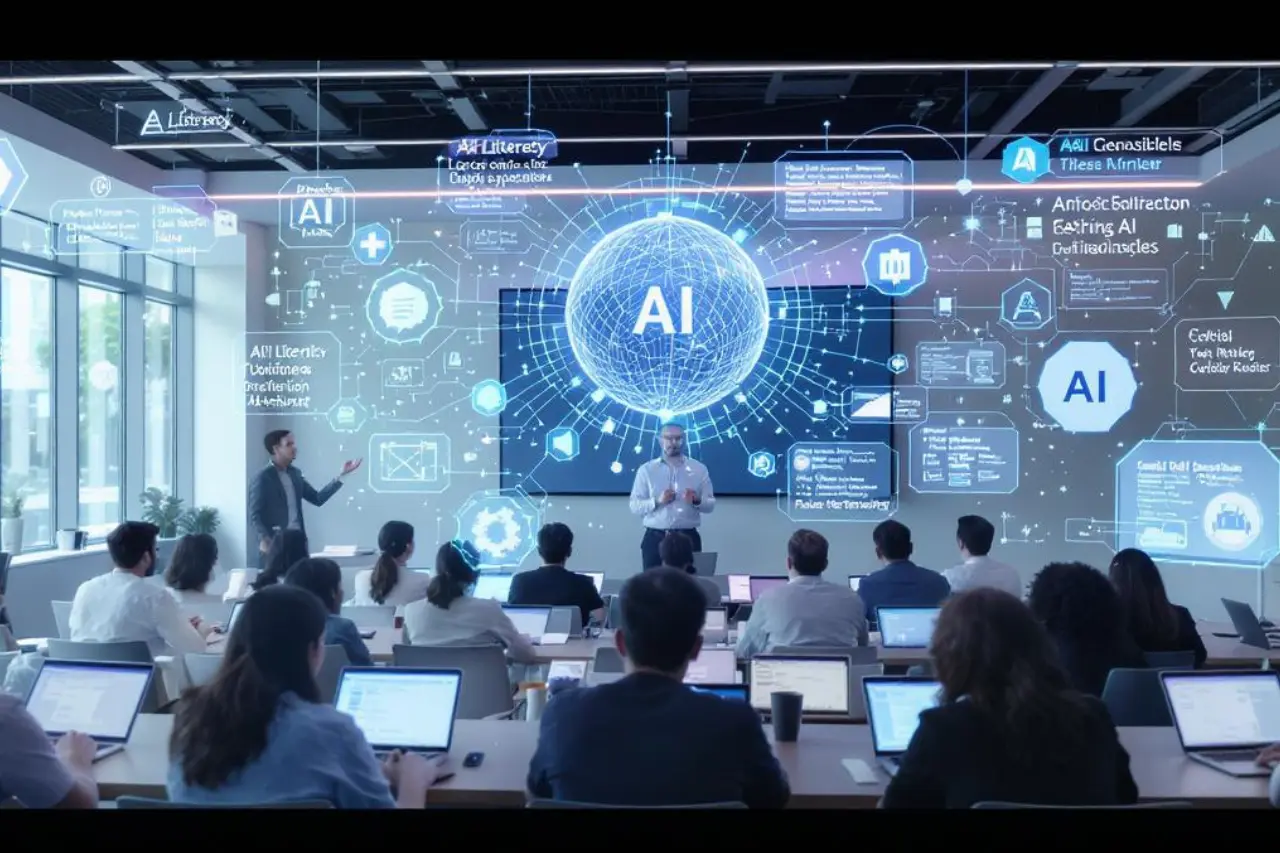
Artificial intelligence is rapidly becoming part of everyday learning, work, and innovation. As students gain access to increasingly capable AI systems, education needs to move beyond simply teaching people how to use these tools. The bigger opportunity is helping students understand AI, question its outputs, build with it, and use it responsibly.
That vision is becoming increasingly visible through CodeAI and OpenAI’s education efforts. CodeAI, formerly known as Code.org, is expanding its focus toward digital fluency, while OpenAI continues developing educational programs that help students and educators use advanced AI capabilities effectively.
Why AI Literacy Matters for Students
AI literacy is becoming a foundational skill because students are entering a world where intelligent systems influence education, employment, communication, and decision making. Consequently, knowing how to generate an answer is no longer enough.
CodeAI emphasizes that students should understand how AI works, direct it with intention, question what it produces, and create with AI. This approach encourages learners to become active participants rather than passive consumers of technology.
Moreover, this educational shift connects closely with emerging AI trends and insights. Students who understand the strengths and limitations of AI can better evaluate information, recognize errors, and make informed decisions when using intelligent systems.
Encouraging Students to Build With AI
One of the most important changes in modern technology education is the movement from using AI toward building with AI. Instead of treating generative tools as answer machines, educators can use them to encourage experimentation, coding, problem solving, and creative development.
OpenAI’s recent education initiatives reflect this direction by giving students and educators structured ways to work with advanced AI capabilities. Its education programs are designed to help learners develop agency, solve complex problems, and turn ideas into practical outcomes.
At the same time, CodeAI’s curriculum introduces students to AI concepts through age appropriate learning experiences. Its AI Foundations and AI Discoveries programs combine technical understanding with ethical and responsible judgment.
Responsible Use Must Remain Central
As AI becomes more powerful, responsible use becomes equally important. AI systems can produce inaccurate information, misunderstand context, or generate outputs that require human verification. Therefore, students need to learn that AI assistance does not replace critical thinking.
CodeAI’s AI learning tools incorporate safeguards, teacher visibility, and guidance designed to support responsible classroom use. Its AI Tutor, for example, is designed to encourage students to think critically and solve problems rather than simply receive answers.
Similarly, OpenAI highlights the importance of verifying AI outputs and using AI thoughtfully. Responsible adoption therefore becomes a core part of effective AI literacy rather than an optional addition.
Connecting AI Literacy With Emerging Technology
The growing focus on education also reflects wider machine learning advancements and generative AI developments. As models become more capable of reasoning, coding, analyzing information, and completing complex tasks, students will need a deeper understanding of how these systems operate.
Furthermore, automation and future tech will continue changing the skills employers value. Students who understand computational thinking, data, AI systems, and responsible technology use may be better positioned to adapt as industries evolve.
These changes also make AI industry updates increasingly relevant to education. Learning about AI should not be limited to current applications. Instead, students should develop the ability to understand new technologies as they emerge.
Preparing Students for the Future of AI Research
The next generation will not simply consume AI innovations. Many students will become researchers, developers, entrepreneurs, educators, and policymakers shaping how intelligent technology is created and deployed.
For that reason, the future of AI research depends partly on building strong foundations today. Education that combines computer science, AI science, data literacy, creativity, and ethical reasoning can help students approach future technologies with greater confidence.
OpenAI has also emphasized the importance of research, teacher training, and responsible deployment in education. Its broader Education for Countries initiative demonstrates how AI adoption can be connected with research and educator enablement.
What This Means for Educators and Learners
The growing collaboration and alignment between technology organizations and education providers sends an important message. AI education should not focus exclusively on mastering individual tools because those tools will continue to change.
Instead, students should learn transferable skills such as asking better questions, evaluating AI generated information, understanding data and algorithms, testing ideas, and creating useful solutions.
For educators, this means creating classroom environments where AI supports learning without replacing the thinking process. For students, it means treating AI as a partner for exploration while remaining responsible for the quality and accuracy of their own work.
Actionable Insights for the AI Era
The most valuable takeaway is that AIliteracy should combine knowledge, experimentation, and judgment. Students should understand what AI can do, recognize where it can fail, verify important information, and use technology to develop original ideas.
Educators can strengthen this process by encouraging students to explain AI generated answers, identify possible errors, compare different outputs, and reflect on how technology influences their decisions. These practices can transform AI from a shortcut into a powerful learning opportunity.
AI Tech Info Pro helps businesses and professionals stay informed about emerging artificial intelligence technologies, practical applications, and the changing digital landscape. Reach out to AI Tech Info Pro to explore smarter ways to understand and apply AI.
Source – edtechinnovationhub