Water is one of the most important resources on Earth, yet managing the complete water cycle is becoming increasingly complex. Growing populations, climate change, aging infrastructure, pollution, and unpredictable weather patterns are putting pressure on water systems worldwide. As a result, organizations are looking toward digital technologies to improve efficiency and sustainability.
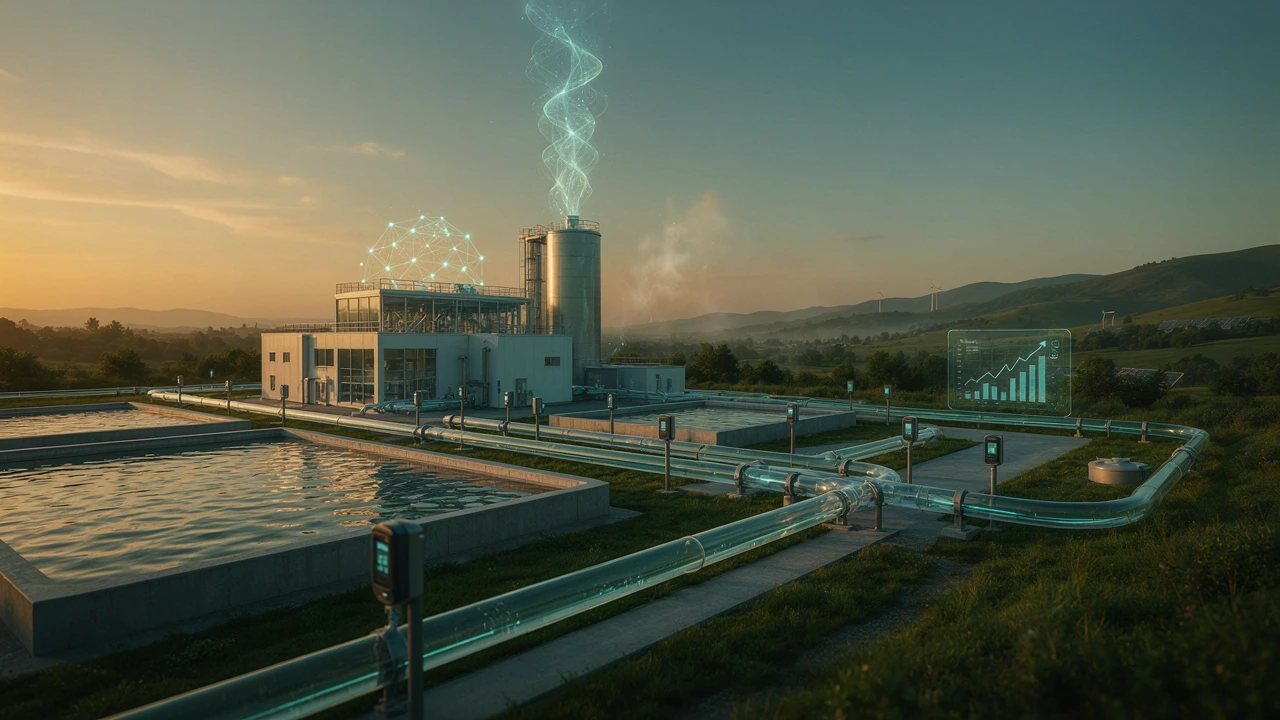
AI and IoT are emerging as powerful technologies for addressing these challenges. IoT devices can continuously collect information from pipelines, reservoirs, treatment facilities, and distribution networks. Meanwhile, artificial intelligence can analyze this information, identify patterns, predict potential problems, and support faster decisions. Together, these technologies can create a more intelligent approach to managing water from collection to consumption and reuse.
How IoT Improves Water Cycle Visibility
IoT plays an important role by connecting physical water infrastructure with digital monitoring systems. Smart sensors can measure water pressure, flow rates, quality, temperature, consumption, and equipment performance in real time.
Consequently, water operators gain greater visibility into what is happening across their networks. Instead of depending entirely on periodic inspections, they can receive continuous information from connected infrastructure. This makes it easier to detect unusual activity and respond before a minor problem develops into a costly failure.
For example, connected sensors can identify abnormal pressure changes that may indicate a leak. Similarly, water quality sensors can detect changes that require immediate investigation. This continuous monitoring creates a stronger foundation for intelligent water management.
AI Turns Water Data Into Useful Decisions
Collecting information is only part of the challenge. The real value comes from understanding what that information means. This is where AI becomes particularly important.
Artificial intelligence can process large volumes of sensor data and recognize patterns that may be difficult for humans to identify manually. Machine learning advancements are helping systems improve their predictions as they process more operational data.
Predictive models can estimate water demand, identify infrastructure that may require maintenance, and detect unusual consumption patterns. Therefore, operators can make decisions based on expected conditions rather than simply reacting to problems after they occur.
These capabilities also reflect broader AI trends and insights across industries, where organizations are increasingly using data driven intelligence to improve resource management and operational efficiency.
Predictive Maintenance Can Reduce Water Loss
Water infrastructure requires regular maintenance, but traditional approaches can sometimes depend on fixed schedules. AI offers a more proactive alternative by predicting when equipment is likely to experience problems.
By analyzing historical performance, sensor readings, pressure levels, vibration, and other operational signals, AI systems can identify early signs of equipment degradation. Maintenance teams can then investigate potential failures before they interrupt services.
This approach can reduce unnecessary maintenance while helping organizations prevent expensive breakdowns. Furthermore, reducing leaks and infrastructure losses can conserve significant amounts of water and improve the overall efficiency of distribution networks.
Intelligent Water Treatment and Quality Monitoring
Water treatment is another area where AI and IoT can deliver meaningful improvements. Treatment facilities handle complex processes that require careful monitoring of multiple conditions.
IoT sensors can continuously track parameters related to water quality and treatment performance. AI systems can then analyze those readings and help operators identify changes that may require adjustments.
As a result, treatment processes can become more responsive and efficient. AI can also support forecasting by identifying patterns associated with changing water conditions. This can help facilities prepare for variations rather than responding only after conditions have changed.
Supporting Sustainable Water Consumption
Smart water management is not limited to utilities and treatment facilities. Connected technologies can also help businesses, communities, agriculture, and households understand how water is being consumed.
Smart meters can provide detailed consumption information, while AI can identify unusual usage and estimate future demand. This information can encourage more efficient consumption and help organizations identify opportunities for conservation.
Moreover, AI can support better resource planning by combining water usage information with weather patterns, historical demand, and environmental data. These capabilities demonstrate how automation and future tech can contribute to more sustainable resource management.
The Role of Generative AI in Water Management
Generative AI developments are creating additional possibilities for water organizations. While predictive AI focuses heavily on forecasting and pattern recognition, generative AI can help transform complex information into easier to understand insights.
For instance, AI assistants could summarize operational reports, explain unusual sensor activity, generate maintenance documentation, or help staff explore large datasets using natural language. This could make technical information more accessible to decision makers who do not work directly with data systems.
However, human oversight remains important. AI generated recommendations should be evaluated against operational requirements, environmental regulations, safety standards, and expert knowledge.
Connecting AI With the Future of Water Infrastructure
The future of water management will increasingly depend on connected and intelligent infrastructure. As more sensors are deployed and data becomes available, AI systems will have more opportunities to improve forecasting, optimization, and automation.
AI industry updates continue to show how intelligent systems are moving from experimental applications toward practical business operations. For water organizations, this transition could mean smarter infrastructure planning, faster fault detection, better demand forecasting, and more efficient resource allocation.
At the same time, Future of AI research may introduce more advanced models capable of understanding complex environmental relationships. Combining these developments with IoT networks could create water systems that continuously learn from changing conditions.
Building a Smarter Water Cycle
Managing the entire water cycle requires more than installing sensors or adopting an AI platform. Organizations need reliable data, secure connected infrastructure, clear operational goals, and skilled teams capable of interpreting intelligent recommendations.
Data security is particularly important because connected infrastructure can create new cybersecurity risks. Therefore, organizations should consider secure device management, controlled access, reliable data governance, and continuous system monitoring when developing smart water initiatives.
Ultimately, successful transformation comes from combining technology with sound operational practices. AI and IoT should support human expertise rather than replace it.
Actionable Insights for Smarter Water Management
Organizations exploring intelligent water management can begin by identifying areas where data visibility is currently limited. Monitoring leaks, consumption, equipment health, and water quality can provide practical starting points for digital transformation.
The strongest results come from connecting IoT data with AI analytics and turning those insights into timely operational decisions. By adopting this approach gradually, organizations can improve efficiency, reduce waste, strengthen infrastructure planning, and move toward a more resilient water cycle.
For more insights on AI, IoT, automation, and emerging technologies, connect with AI Tech Info Pro and explore practical ideas for digital transformation.
Reach out to AI Tech Info Pro to discover how intelligent technology can help turn complex operational challenges into smarter opportunities.
Source – suez