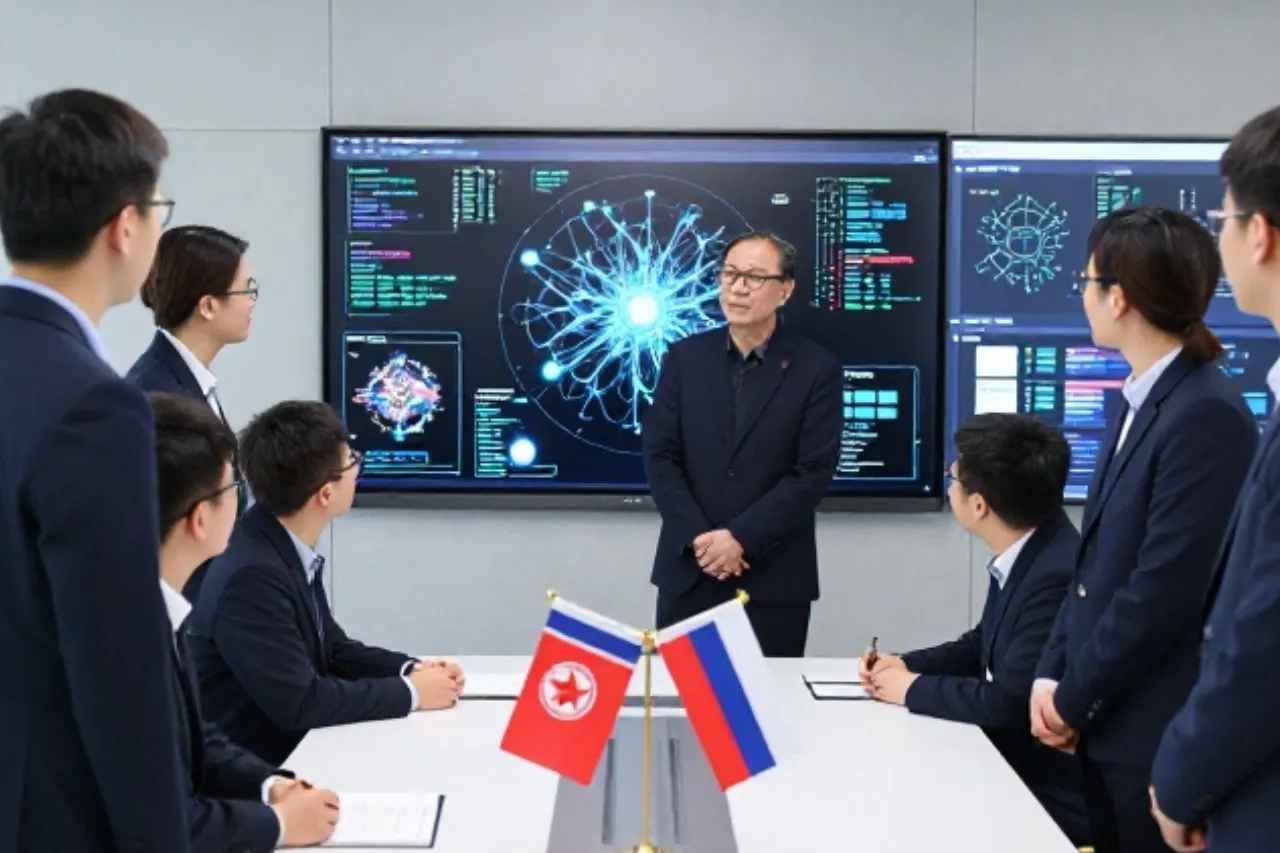
North Korea and Russia are exploring stronger cooperation in artificial intelligence education as both countries look to expand their technological capabilities and academic connections. Their growing relationship is now extending beyond traditional diplomatic and economic engagement into science, education, and emerging technologies.
In October 2026, education representatives from both countries held discussions in Pyongyang about expanding educational exchanges and sharing institutional experience. The discussions included opportunities to explore artificial intelligence applications, reflecting the increasing importance of advanced technology in their bilateral relationship.
This development highlights how AI education is becoming an important area of international engagement. Moreover, it reflects broader AI trends and insights as governments increasingly recognize the value of technical knowledge, research capabilities, and digital skills.
Educational Partnerships Create New Opportunities
The October discussions involved North Korean Education Minister Ri Yong Chol and Russian Education Minister Sergey Kravtsov. Their meeting focused on sharing educational experience and identifying opportunities to strengthen cooperation between academic institutions.
During the visit, the Russian delegation also toured Pyongyang University of Education No. 2. Additionally, the two sides signed a supplementary agreement concerning the establishment and operation of a Russian education center through cooperation between the Pyongyang institution and Blagoveshchensk State Pedagogical University.
Although the education center primarily supports Russian language learning, the wider discussions demonstrate the growing interest in academic exchanges and technological cooperation.
Consequently, these developments could create additional opportunities for students, educators, and researchers to exchange knowledge and gain exposure to different educational approaches.
Artificial Intelligence Research Gains Importance
Artificial intelligence is transforming industries through automation, predictive analytics, natural language processing, and intelligent decision making. Therefore, countries seeking to strengthen their technological capabilities increasingly prioritize AI research and technical education.
North Korea has previously demonstrated interest in developing domestic AI capabilities. In July 2025, a representative associated with Kim Il Sung University’s AI research institute stated that North Korean students, interns, and researchers were being sent to countries including Russia for educational and research exchanges.
Furthermore, reports have highlighted North Korean interest in generative AI and multilingual translation technologies. These developments suggest that the country is exploring different applications of machine learning and advanced computing.
For Russia, international academic partnerships can support its broader technology development ambitions. In particular, collaboration involving research institutions and technical specialists could contribute to knowledge sharing and workforce development.
Machine Learning and Generative AI Create New Possibilities
Machine learning advancements are changing how educational institutions approach research, teaching, and technical training. AI powered systems can analyze large datasets, identify patterns, and support complex research activities.
Similarly, generative AI developments are creating opportunities in language translation, educational content creation, and digital learning environments.
For countries investing in technological education, these capabilities offer potential benefits. Students can develop practical experience with emerging technologies, while researchers can explore new approaches to solving technical challenges.
Nevertheless, meaningful progress requires more than access to software and digital tools. Institutions also need qualified educators, computing infrastructure, research funding, and opportunities for practical experimentation.
Technology Cooperation Faces International Challenges
Despite growing interest in collaboration, North Korea faces significant barriers to international technology exchange. International sanctions related to its weapons programs restrict certain forms of scientific and technological cooperation.
These restrictions create challenges for accessing advanced equipment, computing resources, and international research networks. North Korean academic representatives have previously acknowledged that sanctions complicate international cooperation in artificial intelligence.
Moreover, international concerns surrounding cybersecurity, technology transfers, and the potential military applications of AI make cooperation particularly sensitive.
As a result, the development of bilateral educational initiatives must be considered within the wider geopolitical and regulatory environment.
What This Means for the Future of AI Research
The expanding relationship between North Korea and Russia reflects a broader shift in how countries approach technology partnerships. Artificial intelligence is increasingly connected with national development, scientific research, education, and strategic priorities.
Automation and future tech are also influencing the skills required across modern industries. Consequently, governments are paying greater attention to technical education and specialized research capabilities.
However, the long term impact of these discussions will depend on whether academic exchanges develop into practical research initiatives, meaningful educational opportunities, and measurable technological progress.
For the global technology sector, these developments provide another example of how geopolitical relationships can influence the direction of AI research and international knowledge sharing.
Key Insights Into Emerging AI Education Partnerships
The strengthening relationship between North Korea and Russia highlights the growing importance of AI education in international cooperation. However, discussions and institutional agreements should not automatically be interpreted as evidence of major technological breakthroughs.
For technology observers, the most important developments to monitor include researcher exchanges, university partnerships, access to computing infrastructure, and practical AI research outcomes.
Additionally, policymakers and technology organizations should consider how international restrictions, cybersecurity concerns, and responsible AI practices influence cross border collaboration.
Ultimately, the future of AI research will depend not only on technological investment but also on educational quality, research transparency, and responsible innovation.
For more AI trends and insights, emerging technology developments, and expert industry perspectives, explore AITechInfoPro.
Connect with AITechInfoPro to stay informed about artificial intelligence innovations and the technologies shaping the future.
Source – nknews