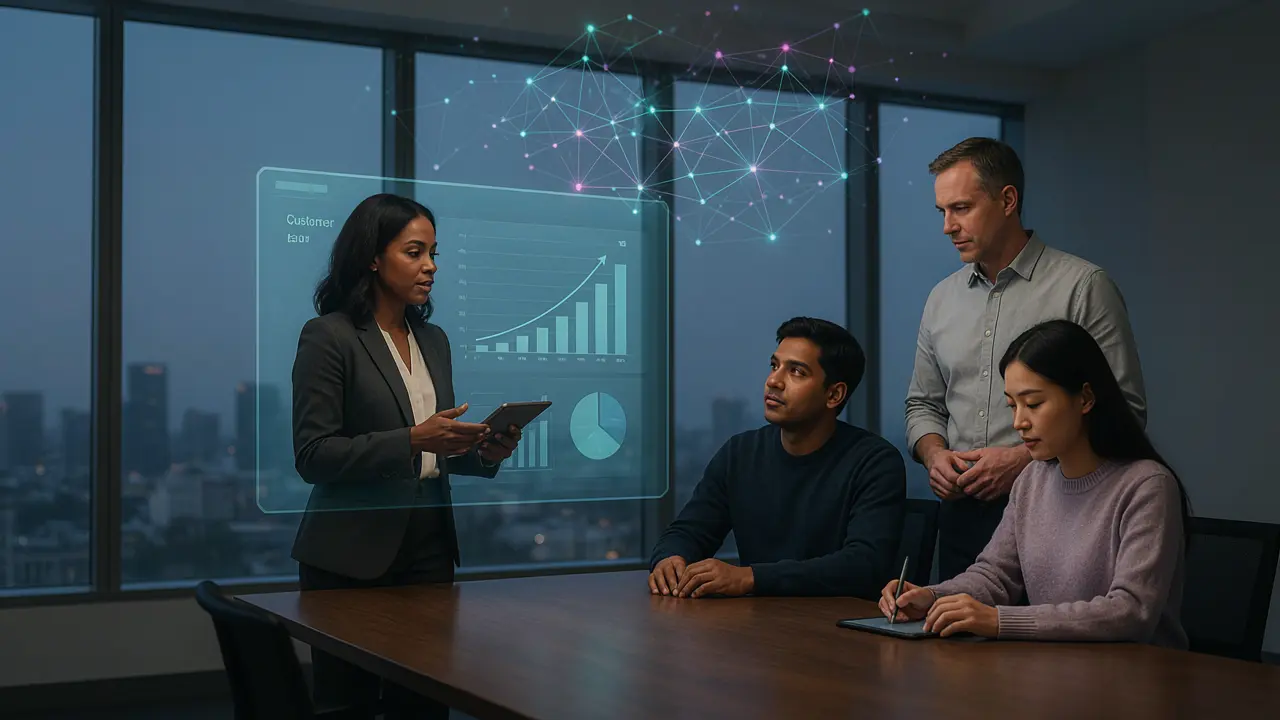
Marketing has always evolved alongside technology, but artificial intelligence is changing the discipline at an exceptional pace. AI capabilities are now influencing how businesses understand customers, create content, optimize campaigns, and identify opportunities for growth.
Previously, marketers often depended on historical data and manual analysis to make important decisions. Today, intelligent systems can process enormous volumes of information, identify patterns, and provide insights much faster. Consequently, marketing teams can move from simply reacting to customer behavior toward anticipating what audiences may need next.
This transformation is reflected in growing AI trends and insights, as organizations increasingly integrate intelligent technology into everyday marketing operations.
Smarter Campaign Planning With AI
Campaign planning is becoming more precise as AI capabilities improve. Intelligent platforms can analyze customer demographics, behavioral patterns, previous interactions, and campaign performance to identify promising audience segments.
As a result, marketers can develop campaigns that are more closely aligned with customer interests. AI can also help determine which messages are likely to perform well across different channels. Instead of relying entirely on broad assumptions, marketing teams can use data driven insights to refine their strategies continuously.
Moreover, predictive systems can estimate potential campaign outcomes before significant resources are committed. This allows teams to adjust messaging, targeting, and spending earlier in the process.
Personalization at Greater Scale
Personalization has become an important part of customer experience, yet delivering individualized communication to thousands or millions of customers can be challenging. AI capabilities make large scale personalization considerably more practical.
AI systems can evaluate customer behavior and identify preferences based on browsing activity, purchase history, engagement patterns, and other relevant signals. Consequently, businesses can deliver more relevant recommendations, advertisements, emails, and website experiences.
This capability can also improve customer relationships. When communication feels timely and useful rather than repetitive, customers are more likely to engage with a brand.
Generative AI Is Accelerating Content Creation
The growth of Generative AI developments has introduced another major shift in marketing. AI tools can assist with content ideation, advertising concepts, product descriptions, social media copy, and other creative tasks.
However, the greatest value does not necessarily come from allowing AI to create everything independently. Instead, marketers can use these systems as creative partners that accelerate research and first drafts while human professionals maintain brand voice, accuracy, originality, and strategic direction.
Therefore, generative technology can reduce repetitive workloads while giving creative teams more time to focus on ideas that require human judgment.
Machine Learning Improves Marketing Decisions
Behind many modern AI capabilities are advances in machine learning. Machine learning advancements allow systems to learn from historical information and improve their predictions as new data becomes available.
In marketing, this can support customer segmentation, demand forecasting, recommendation systems, conversion prediction, and campaign optimization. Over time, algorithms can recognize subtle relationships that may be difficult for humans to identify manually.
Furthermore, machine learning can help marketers understand why certain campaigns perform differently across audiences. These insights can then influence future strategies and create a continuous cycle of testing and improvement.
Automation Is Changing Marketing Operations
Marketing teams spend considerable time handling repetitive processes. AI powered automation can simplify many of these activities while maintaining consistency across customer touchpoints.
For example, intelligent systems can help automate audience segmentation, campaign scheduling, lead qualification, reporting, and customer communications. As automation and future tech continue to develop, marketers can increasingly shift their attention from administrative tasks toward strategy and creative problem solving.
Importantly, automation does not mean removing people from marketing. Instead, it can allow teams to use their expertise where it delivers greater value.
AI Powered Customer Insights
Understanding customers is central to successful marketing. Yet traditional research methods can sometimes provide only a limited view of rapidly changing preferences.
Modern AI capabilities can analyze structured and unstructured information from multiple sources. Businesses can use these insights to identify emerging interests, changes in sentiment, and potential customer concerns.
Consequently, marketing teams can make decisions based on a broader understanding of their audiences. This becomes especially valuable when markets change quickly and businesses need to respond before competitors.
Measuring Growth More Intelligently
AI is also changing how organizations evaluate marketing performance. Rather than focusing only on individual metrics, intelligent analytics can connect customer interactions across different stages of the buying journey.
This helps marketers identify which activities contribute most effectively to conversions and long term customer value. Furthermore, predictive analytics can highlight potential opportunities and risks before they become obvious through conventional reporting.
As AI industry updates continue to introduce more sophisticated analytics capabilities, businesses will increasingly have opportunities to connect marketing activity with measurable growth.
Challenges That Marketers Must Consider
Despite its advantages, AI requires responsible implementation. Poor quality data can produce unreliable recommendations, while excessive automation can make customer interactions feel impersonal.
Privacy is equally important. Businesses must handle customer information responsibly and maintain transparency about how data is collected and used. Human oversight also remains essential because AI generated recommendations may lack important business or cultural context.
For this reason, successful AI adoption requires a balance between technological capability and human judgment.
What the Future Holds for AI Driven Marketing
The next stage of marketing will likely involve deeper collaboration between people and intelligent systems. Future of AI research is expected to continue improving prediction, reasoning, personalization, and automation capabilities.
As these technologies mature, marketers may spend less time gathering information and more time interpreting it. Campaigns could become increasingly adaptive, changing according to customer behavior and market conditions in near real time.
Ultimately, the competitive advantage will not come simply from having access to AI. It will come from knowing how to apply these capabilities thoughtfully, creatively, and responsibly.
Valuable Insights for Marketing Leaders
Businesses looking to adopt AI should begin with clear marketing objectives rather than selecting technology simply because it is new. Identifying specific challenges such as inefficient campaign analysis, weak personalization, or repetitive workflows can reveal where AI can provide measurable value.
Teams should also maintain strong human oversight and regularly evaluate AI generated outcomes. Combining reliable data, skilled marketing professionals, responsible governance, and intelligent automation can create a stronger foundation for sustainable growth.
The most effective strategy is therefore not to replace marketing expertise with AI, but to enhance human decision making with faster analysis, better predictions, and more scalable execution.
Stay ahead of emerging technologies with practical perspectives and informed insights from AITechInfoPro.
Reach out to AITechInfoPro to explore how evolving AI capabilities can support smarter marketing and sustainable business growth.