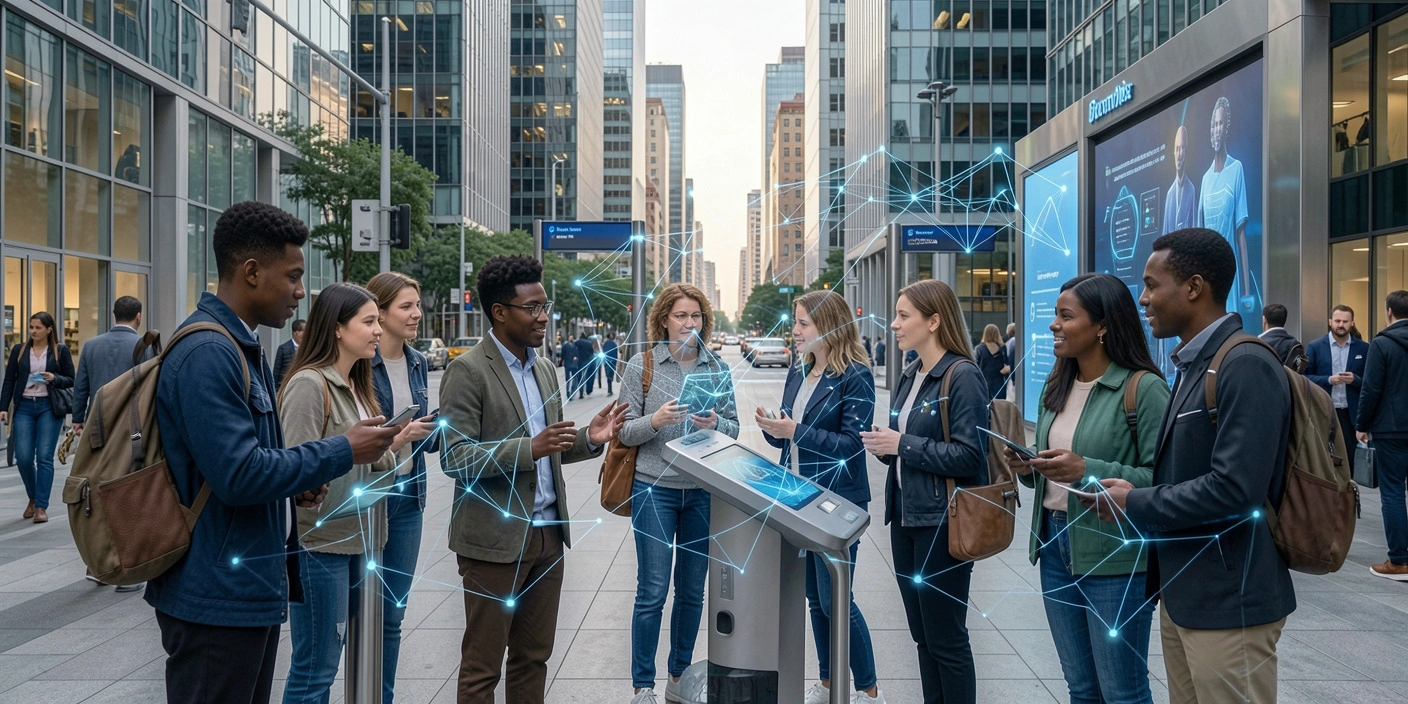
Artificial intelligence is moving beyond experimental technology and becoming an important tool for improving public services and infrastructure. Governments and public organizations are exploring intelligent systems to make services faster, more accessible, reliable, and responsive to changing community needs.
From transportation networks and energy systems to healthcare, public safety, and administrative services, AI can analyze enormous volumes of information and identify patterns that would be difficult to detect manually. Consequently, public organizations can make better informed decisions while improving the experience of citizens.
However, successful implementation requires more than adopting new technology. It requires thoughtful planning, responsible data practices, strong security, and a clear understanding of public needs.
Why AI Matters for Public Infrastructure
Infrastructure supports almost every aspect of modern life. Roads, bridges, water networks, power grids, public transportation, and communication systems must operate reliably every day.
Traditionally, many infrastructure decisions have relied on scheduled inspections and historical information. AI can introduce a more predictive approach. Intelligent systems can analyze sensor readings, operational data, weather conditions, and maintenance records to identify potential problems before they become major failures.
For example, predictive systems can identify unusual patterns in equipment performance and alert maintenance teams before an expensive breakdown occurs. As a result, organizations can reduce downtime, control maintenance costs, and improve public safety.
Smarter Public Transportation
Transportation is another area where AI can create meaningful improvements. Cities generate enormous amounts of information through traffic cameras, public transportation systems, road sensors, navigation platforms, and connected devices.
AI systems can process this information to identify congestion patterns and improve traffic management. Furthermore, intelligent forecasting can help transportation authorities understand demand and adjust services accordingly.
Machine learning advancements are making these capabilities increasingly sophisticated. Systems can learn from historical transportation data and improve their predictions over time, helping cities respond more effectively to changing travel patterns.
Improving Public Healthcare Services
Healthcare systems can also benefit from intelligent technology. AI can support administrative processes, analyze medical information, assist with resource planning, and help healthcare organizations identify patterns in patient demand.
However, public healthcare requires particularly careful implementation. Sensitive information must be protected, while automated systems should be monitored to reduce the risk of inaccurate or unfair outcomes.
Therefore, AI should support healthcare professionals rather than replace human judgment in situations where decisions can significantly affect people’s lives.
Generative AI Can Improve Citizen Services
Generative AI developments are creating new possibilities for interactions between governments and citizens. Intelligent assistants can help people find information, understand public procedures, complete forms, and access services more conveniently.
For example, a public service assistant could explain eligibility requirements or guide a citizen through an application process at any time of day. This could reduce pressure on administrative teams while making services easier to navigate.
Nevertheless, public sector organizations must establish clear safeguards. Citizens should know when they are interacting with an automated system, and sensitive decisions should remain subject to appropriate human oversight.
Using AI to Manage Energy and Utilities
Energy and utility infrastructure is becoming increasingly complex. Demand can fluctuate throughout the day, while renewable energy sources introduce additional variability into power generation.
AI can help organizations forecast demand, identify equipment issues, optimize distribution, and improve the use of renewable energy. Consequently, intelligent infrastructure could contribute to more efficient and resilient energy networks.
The same principle can apply to water management. AI systems can analyze consumption patterns, detect unusual activity, and potentially identify leaks before they cause significant losses.
Automation Can Make Public Operations More Efficient
Administrative work often involves repetitive processes that consume significant amounts of employee time. Automation and future tech can help public organizations streamline these activities while allowing employees to focus on more complex responsibilities.
Document processing, appointment management, data classification, internal reporting, and routine communication can potentially be supported by intelligent automation.
However, efficiency should not become the only objective. Public services exist to serve people, so automation should improve accessibility and service quality rather than create additional barriers.
Security and Trust Must Remain Priorities
As public organizations adopt AI, cybersecurity becomes even more important. Government systems contain valuable information and often support essential services, making them attractive targets for cyber threats.
Strong security controls, careful data governance, continuous monitoring, and regular system testing are therefore essential. Organizations must also consider how AI systems could be manipulated or produce unreliable results.
These concerns are increasingly visible in wider AI industry updates, where trust, transparency, privacy, and responsible deployment are becoming central issues.
The Future of AI in Public Services
The future of AI in public services will likely involve greater integration between intelligent systems, connected infrastructure, cloud platforms, sensors, and human decision makers.
AI trends and insights suggest that organizations will increasingly focus on practical applications that deliver measurable improvements rather than adopting technology simply because it is new.
At the same time, Future of AI research will continue exploring areas such as advanced reasoning, autonomous systems, responsible AI, and more capable machine learning models. These developments could eventually create new opportunities for public infrastructure that are difficult to imagine today.
Practical Insights for Public Sector Leaders
Organizations considering AI should begin with clearly defined problems rather than technology itself. A successful project should have measurable objectives, reliable data, appropriate security controls, and a realistic plan for human oversight.
Equally important, public organizations should involve employees and communities throughout the process. Their feedback can reveal practical challenges that technical teams may overlook.
Ultimately, building AI for public services is about creating systems that make everyday life safer, simpler, and more efficient. When technology is introduced responsibly, intelligent infrastructure can become a valuable foundation for more responsive public services.
Stay informed with practical AI trends and insights, emerging technologies, and developments shaping the future of intelligent systems.
Reach out to AITechInfoPro for technology perspectives that help organizations understand AI opportunities and make smarter decisions.