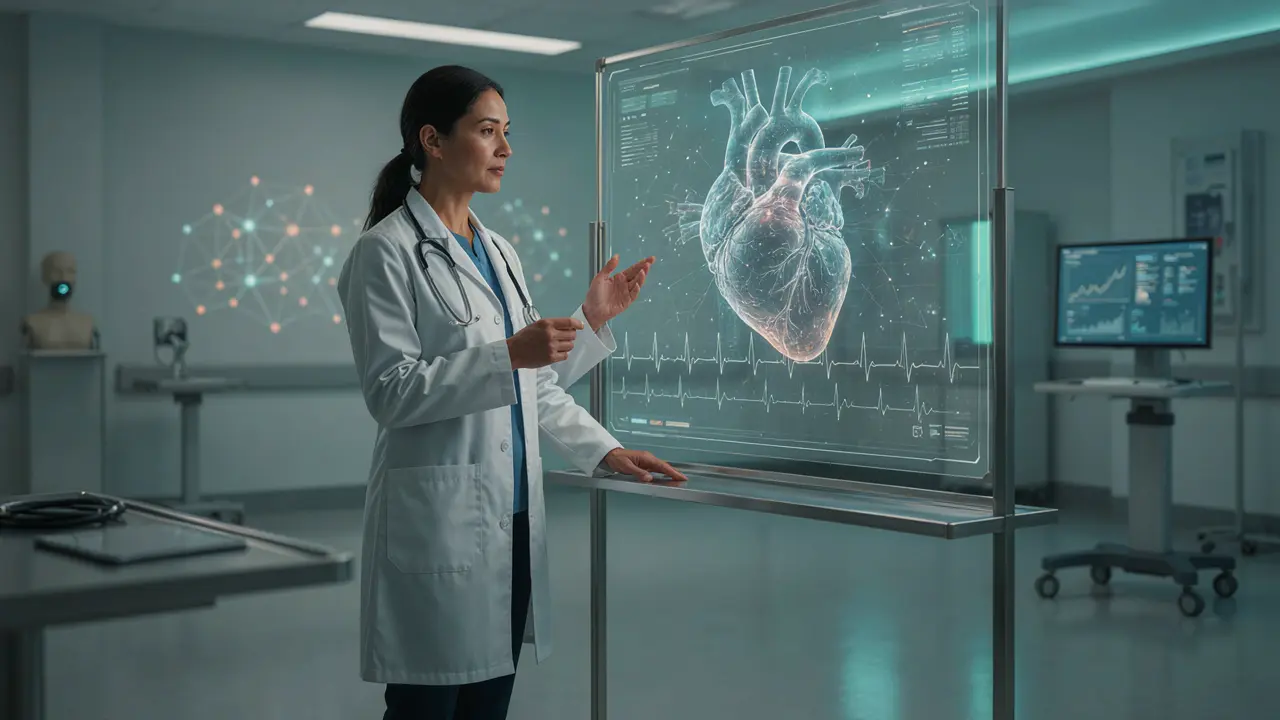
Healthcare in America is entering an important period of technological change. Among the most promising developments is deep learning, a form of artificial intelligence that can identify complex patterns in large amounts of medical data. As healthcare providers manage growing volumes of patient information, deep learning is creating new opportunities to support faster and more informed decisions.
The future of heart care is particularly promising because cardiovascular conditions often require continuous monitoring, early detection and highly personalized treatment. Deep learning systems can analyze medical images, patient records, heart signals and other clinical information to help healthcare professionals recognize potential risks sooner.
Consequently, Deep Learning and the Future of Heart Care in America are becoming closely connected as hospitals and researchers explore new ways to improve cardiovascular outcomes.
Earlier Detection of Heart Conditions
One of the biggest advantages of deep learning in healthcare is its ability to identify patterns that may not be immediately obvious. Heart disease can develop gradually, and some warning signs may remain difficult to detect during routine examinations.
Deep learning models can examine information from electrocardiograms, medical imaging and other diagnostic tests. By learning from large datasets, these systems can help identify unusual patterns associated with cardiovascular risks.
However, artificial intelligence is not intended to replace physicians. Instead, it can provide additional information that helps clinicians investigate possible problems and make better informed decisions.
This growing capability reflects broader AI trends and insights across healthcare, where intelligent systems are increasingly being explored as decision support tools.
Smarter Medical Imaging
Medical imaging is another area where deep learning is creating significant possibilities. Cardiologists often need to evaluate detailed images of the heart and surrounding structures. Traditionally, this process depends heavily on specialist expertise and careful examination.
Deep learning can assist by analyzing medical images and identifying patterns that could require closer attention. This may help clinicians process large numbers of images more efficiently while maintaining a consistent approach to evaluation.
Furthermore, advances in image analysis are supporting research into cardiovascular conditions that can be challenging to identify at an early stage. As machine learning advancements continue, these technologies could become increasingly useful within clinical workflows.
Personalized Heart Care
Every patient has different risk factors, medical history and treatment requirements. Because of this, personalized healthcare has become an important goal for modern medicine.
Deep learning can contribute to personalized heart care by analyzing information from multiple sources. A system could potentially evaluate a patient’s medical history, test results, lifestyle information and previous treatment responses to help clinicians understand individual risk patterns.
The value of this approach goes beyond diagnosis. More personalized insights could support treatment planning and long term monitoring while helping healthcare professionals understand how individual patients respond to different interventions.
Continuous Patient Monitoring
Heart care does not end when a patient leaves a hospital or doctor’s office. Continuous monitoring can be especially valuable for people who have cardiovascular risk factors or existing heart conditions.
Wearable devices and connected healthcare technologies can generate substantial amounts of information related to heart rate and other health indicators. Deep learning systems can analyze these data streams and potentially identify changes that deserve medical attention.
As a result, healthcare could gradually move toward more proactive monitoring. Instead of relying entirely on occasional appointments, clinicians may increasingly use technology supported insights to understand changes in a patient’s condition over time.
This development is part of the broader movement toward automation and future tech in healthcare.
Supporting Doctors Rather Than Replacing Them
Despite the excitement surrounding artificial intelligence, human expertise remains central to heart care. Medical decisions involve patient preferences, clinical judgment, communication and ethical considerations that cannot be reduced to data analysis alone.
Deep learning should therefore be viewed as a supporting technology. It can process information quickly, highlight potential concerns and assist with repetitive analytical tasks. Physicians can then combine these insights with their knowledge and experience.
This human and technology partnership could make healthcare more efficient while allowing clinicians to spend more time on patient communication and complex decision making.
Challenges Facing AI Powered Heart Care
The adoption of deep learning in healthcare also presents important challenges. Medical data must be handled responsibly, and patient privacy must remain a priority. Healthcare organizations also need to ensure that AI systems are trained using reliable and representative data.
Accuracy is another important consideration. A system that performs well on one dataset may not produce identical results across different hospitals or patient populations. Therefore, ongoing testing, validation and clinical oversight are essential.
At the same time, healthcare professionals need appropriate training to understand how AI systems work and how their recommendations should be interpreted.
These issues are becoming increasingly important within AI industry updates as organizations evaluate how artificial intelligence can be introduced responsibly into critical areas such as medicine.
The Future of AI Research in Cardiology
Research into artificial intelligence and cardiology is continuing to expand. Scientists and healthcare organizations are exploring how increasingly sophisticated models can support diagnosis, risk prediction and treatment planning.
Generative AI developments may also influence healthcare by helping professionals summarize information, organize clinical documentation and interact with complex medical knowledge. While these applications require careful oversight, they demonstrate how rapidly the healthcare technology landscape is evolving.
Meanwhile, future of AI research will likely focus on improving reliability, explainability and clinical usefulness. The goal is not simply to create more advanced systems but to develop technologies that provide meaningful benefits for patients and healthcare professionals.
Actionable Insights for the Future of Heart Care
Healthcare organizations considering deep learning should focus on practical clinical value rather than adopting technology simply because it is innovative. Strong data governance, appropriate validation and physician involvement should remain central to implementation.
Patients can also benefit from understanding how AI supported healthcare works. Technology can provide useful insights, but medical decisions should continue to involve qualified healthcare professionals who understand the patient’s complete circumstances.
For healthcare leaders, the most valuable approach is to view deep learning as part of a broader digital transformation. When implemented responsibly, it can support earlier detection, more personalized care and more efficient clinical processes.
Deep learning is positioned to become an increasingly important part of heart care in America. Its greatest potential may come from combining advanced technology with human expertise to create a healthcare system that is more proactive, personalized and responsive.
For more insights into AI trends, healthcare innovation and emerging technology, reach out to AI Tech Info Pro today.
Connect with AI Tech Info Pro to explore how the latest AI developments can shape the future of your organization.