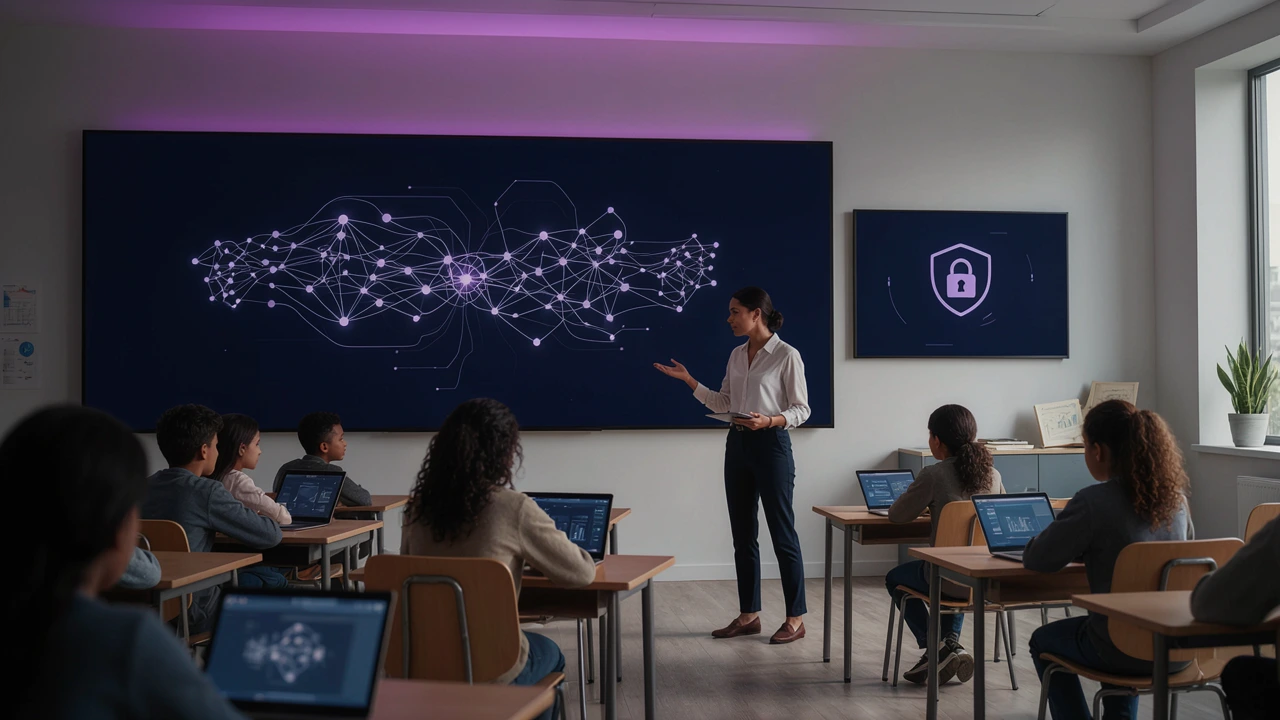
Artificial intelligence is rapidly becoming part of classrooms, administrative systems and student support services. As schools explore new technologies, the US Education Department is providing a clearer framework for responsible AI adoption.
In July 2025, the department issued guidance explaining how federal education grant funds could support responsible AI integration. The guidance covered AI based instructional materials, high impact tutoring and college and career pathway exploration.
Since then, the federal approach has moved further. In April 2026, the department finalized a supplemental priority focused on advancing artificial intelligence in education. This development gives schools and education organizations a stronger signal that AI skills, responsible implementation and technology enabled learning will remain important areas of investment.
What the New AI Direction Means for Schools
The new approach does not simply encourage schools to purchase more AI tools. Instead, it emphasizes responsible adoption, educator involvement and meaningful improvements in learning.
The department has highlighted principles including educator leadership, ethical use, accessibility, transparency and protection of student data. Therefore, schools are expected to consider both the opportunities and risks associated with AI before introducing these technologies at scale.
This distinction is important because AI adoption without clear objectives can create unnecessary costs or introduce privacy and accuracy concerns. Schools need to understand what problem an AI system is solving and whether it actually improves the educational experience.
AI Literacy Becomes a Bigger Priority
One of the most important developments is the growing emphasis on AI literacy. The department’s 2025 proposal called for AI and computer science education across K 12 schools and higher education, along with professional development for educators.
Consequently, AI education is becoming broader than simply teaching students how to use a chatbot. Students increasingly need to understand how AI systems work, how information can be generated or manipulated and why human judgment remains important.
This shift also connects directly with current AI trends and insights. As machine learning advancements and Generative AI developments continue to influence workplaces, students need practical digital skills that can prepare them for changing career environments.
Teachers Remain Central to AI Adoption
Although automation and future tech are changing education, teachers remain central to effective learning. The department’s guidance emphasizes that AI should support educators rather than replace their critical role.
For example, AI can assist with instructional materials, personalized learning activities, administrative tasks and tutoring support. However, educators still need to evaluate whether generated content is accurate, appropriate and relevant to individual students.
Moreover, teacher training will become increasingly important. Without sufficient preparation, even technically capable AI systems may deliver limited value because educators may not know when or how to use them effectively.
Privacy and Responsible AI Matter
As schools adopt AI, student privacy becomes an increasingly important consideration. AI systems may process educational records, student interactions or other sensitive information. Therefore, schools need clear policies covering data handling, access and transparency.
The Department of Education has also emphasized the importance of protecting student data and involving parents and other stakeholders when new technologies are introduced.
Additionally, AI systems must be monitored for inaccurate or discriminatory outcomes. The department’s Office for Civil Rights has previously warned that AI can create or contribute to discrimination if it is not used appropriately.
Generative AI Is Changing Classroom Possibilities
Generative AI developments are creating new opportunities for teachers and students. Educators can use AI to develop draft learning materials, personalize activities and explore different approaches to explaining difficult concepts.
At the same time, schools must address concerns surrounding academic integrity, misinformation and overreliance on automated systems. Students should learn how to use AI as a supporting technology while maintaining their own critical thinking and creativity.
The goal should therefore be responsible collaboration between people and technology rather than replacing human learning with automated answers.
What Technology Providers Need to Consider
The changing federal approach also has implications for education technology companies. Providers increasingly need to demonstrate that their products deliver meaningful instructional value rather than simply offering attractive AI features.
The department’s August 2026 technology guidance encourages schools and providers to consider what learning problem a tool solves, when it should be used, who should use it, how long it should be used and what evidence demonstrates improved learning.
As a result, evidence based product development could become increasingly important across the education technology market. AI industry updates will therefore need to be evaluated not only through innovation but also through measurable educational outcomes.
The Broader Impact on Future Education
The latest policy direction reflects a broader transformation taking place across education and technology. Schools are increasingly preparing students for workplaces where AI systems, automation and advanced digital tools will influence everyday tasks.
Meanwhile, Future of AI research will continue shaping expectations around learning, employment and digital skills. Machine learning advancements may create new educational applications, while automation and future tech could reduce repetitive administrative work.
However, successful adoption will depend on maintaining a balance between technological innovation and human judgment. Schools that focus on outcomes, teacher readiness and student needs may be better positioned to make practical decisions as the technology evolves.
Practical Insights for Schools and Educators
Schools should begin by identifying specific educational challenges that AI can address rather than adopting technology simply because it is new. Clear objectives can make technology investments easier to evaluate and manage.
Educators should also receive practical AI training that covers responsible use, privacy, verification and classroom applications. Furthermore, students should develop AI literacy alongside traditional research, communication and critical thinking skills.
Most importantly, schools should continuously evaluate whether AI is producing meaningful results. The technology landscape will change quickly, so policies should remain flexible enough to respond to new AI industry updates while protecting students and preserving the human side of education. Stay informed about AI trends and insights, Generative AI developments and the technologies shaping tomorrow’s digital world with AITechInfoPro.
Reach out to AITechInfoProfor more insights into AI innovation, emerging technology and the future of intelligent systems.