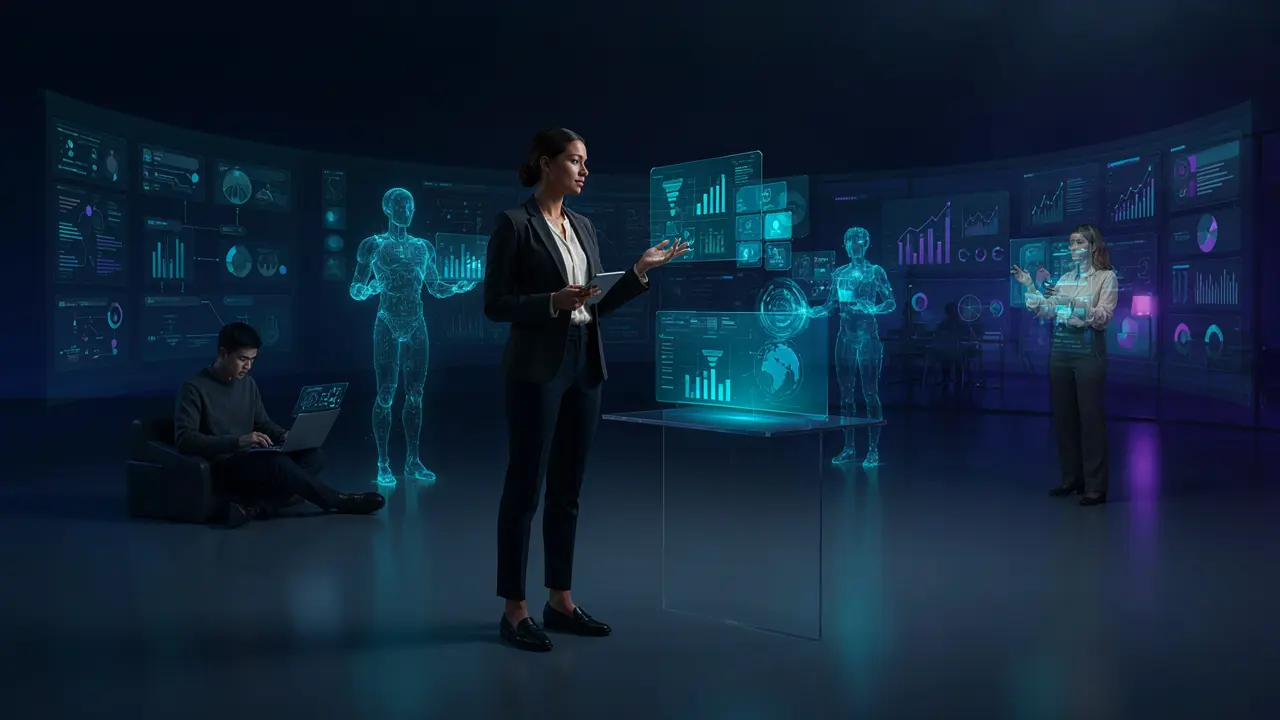
Artificial intelligence is changing marketing from the inside out. As AI agents become capable of analyzing data, generating content, optimizing campaigns and supporting customer interactions, marketing leaders are rethinking how their departments operate. This shift is creating a new type of marketing leader often described as the A Shaped CMO.
The A Shaped CMO represents a broader leadership approach built around business strategy, creativity, technology awareness and cross functional collaboration. Rather than simply adding AI tools to existing workflows, these leaders are redesigning marketing teams around intelligent systems and human expertise.
What the A Shaped CMO Means for Modern Marketing
The A Shaped CMO combines deep marketing knowledge with the ability to connect different disciplines. Traditionally, marketing leadership focused heavily on brand strategy, customer acquisition, communication and revenue growth. Today, however, technology has become closely connected to each of these responsibilities.
AI agents can increasingly perform tasks that once required significant human effort. They can interpret customer behavior, identify trends, assist with campaign planning and personalize communications. Consequently, marketing leaders need to understand how these systems work while ensuring that human judgment remains central to important decisions.
The A Shaped CMO therefore focuses less on managing isolated marketing functions and more on orchestrating people, data and intelligent technology.
Why AI Agent Marketing Is Gaining Momentum
AI agent marketing is emerging as businesses look for ways to make marketing operations faster and more responsive. Unlike basic automation, AI agents can evaluate information, make recommendations and complete connected tasks with limited human intervention.
For example, an AI agent could identify a change in customer behavior, recommend a campaign adjustment and help create supporting content. Another system could monitor campaign performance and highlight opportunities for optimization.
As a result, marketing teams can move from manually managing repetitive activities toward supervising intelligent workflows. This transformation is becoming an important part of current AI trends and insights across the industry.
Marketing Departments Are Being Redesigned
The growing use of AI agents is also changing how marketing departments are structured. Instead of organizing teams entirely around traditional functions, businesses are beginning to consider how humans and intelligent systems can work together.
Content specialists may collaborate with generative AI systems, while analysts can use machine learning advancements to uncover customer patterns. Campaign managers can also rely on intelligent platforms to monitor performance and identify opportunities.
However, this does not mean replacing marketing professionals with machines. Instead, the goal is to allow employees to spend more time on strategic thinking, creativity, relationships and complex decision making.
This balance is especially important because successful marketing still depends on understanding human motivations and cultural context.
Generative AI Is Expanding Creative Capabilities
Generative AI developments are accelerating the transformation of marketing teams. Modern systems can assist with writing, visual concepts, campaign variations, research and personalization.
For marketing leaders, the opportunity goes beyond producing content faster. Generative AI can help teams experiment with more ideas and adapt messaging for different audiences.
Nevertheless, human oversight remains essential. Brand voice, accuracy, originality and customer trust cannot simply be delegated to an automated system. The A Shaped CMO must therefore establish processes that combine machine efficiency with human creativity.
Data Is Becoming a Leadership Priority
AI agent marketing depends heavily on reliable data. If customer information is fragmented, outdated or poorly governed, intelligent systems may produce weak recommendations.
Therefore, marketing leaders need to work closely with technology, analytics and data teams. Strong data governance can improve personalization while also helping organizations manage privacy and security expectations.
At the same time, AI industry updates increasingly highlight the importance of responsible AI adoption. Marketing leaders must understand not only what AI can accomplish but also where its limitations and risks exist.
Automation Is Changing Marketing Skills
Automation and future tech are creating demand for a different mix of marketing capabilities. Strategic thinking, analytical skills, AI literacy and experimentation are becoming increasingly valuable.
Marketing professionals do not necessarily need to become software engineers. Instead, they need to understand how to work effectively with AI systems, evaluate outputs and translate technology capabilities into business outcomes.
The A Shaped CMO plays an important role in building this environment. By encouraging continuous learning, leaders can help teams adapt as technologies evolve.
The Human Role Remains Essential
Despite rapid advances, marketing cannot become entirely machine driven. Customers respond to authenticity, empathy and meaningful experiences, which require human understanding.
AI can identify patterns, generate possibilities and automate processes. Humans still need to determine whether those possibilities make sense for a particular audience and brand.
Consequently, the future of marketing will likely depend on collaboration rather than competition between people and intelligent systems. Future of AI research will continue to influence this relationship as AI capabilities become more sophisticated.
What Marketing Leaders Should Focus On Next
Marketing leaders should begin by identifying repetitive processes where AI agents can provide measurable value. They should then establish clear ownership, governance and review processes before expanding implementation.
Equally important is developing an AI ready culture. Employees need opportunities to experiment with new tools while understanding responsible usage, data protection and quality standards.
Rather than pursuing every emerging technology, leaders should connect AI investments to customer experience, revenue growth and operational efficiency. This approach can help organizations avoid unnecessary complexity while building sustainable capabilities.
Insights for Modern Marketing Leaders
The rise of AI agent marketing signals a broader transformation in how marketing departments operate. The strongest leaders will not simply adopt more AI tools. They will redesign workflows, develop new skills and create productive relationships between people and intelligent systems.
The A Shaped CMO reflects this evolution by combining marketing expertise with technology awareness and strategic coordination. As AI continues to mature, this leadership model can help organizations remain adaptable while preserving the creativity and human connection that make marketing effective.
For businesses exploring practical AI strategies, understanding emerging technology trends can provide a valuable competitive advantage. Staying informed about AI trends and insights, machine learning advancements and future technology developments can help marketing teams prepare for what comes next.
Explore the latest AI developments, emerging technologies and practical business insights with AITechInfoPro.
Reach out to AI Tech Info Pro to discover how intelligent technology can support your digital growth strategy.
Source – salesforce