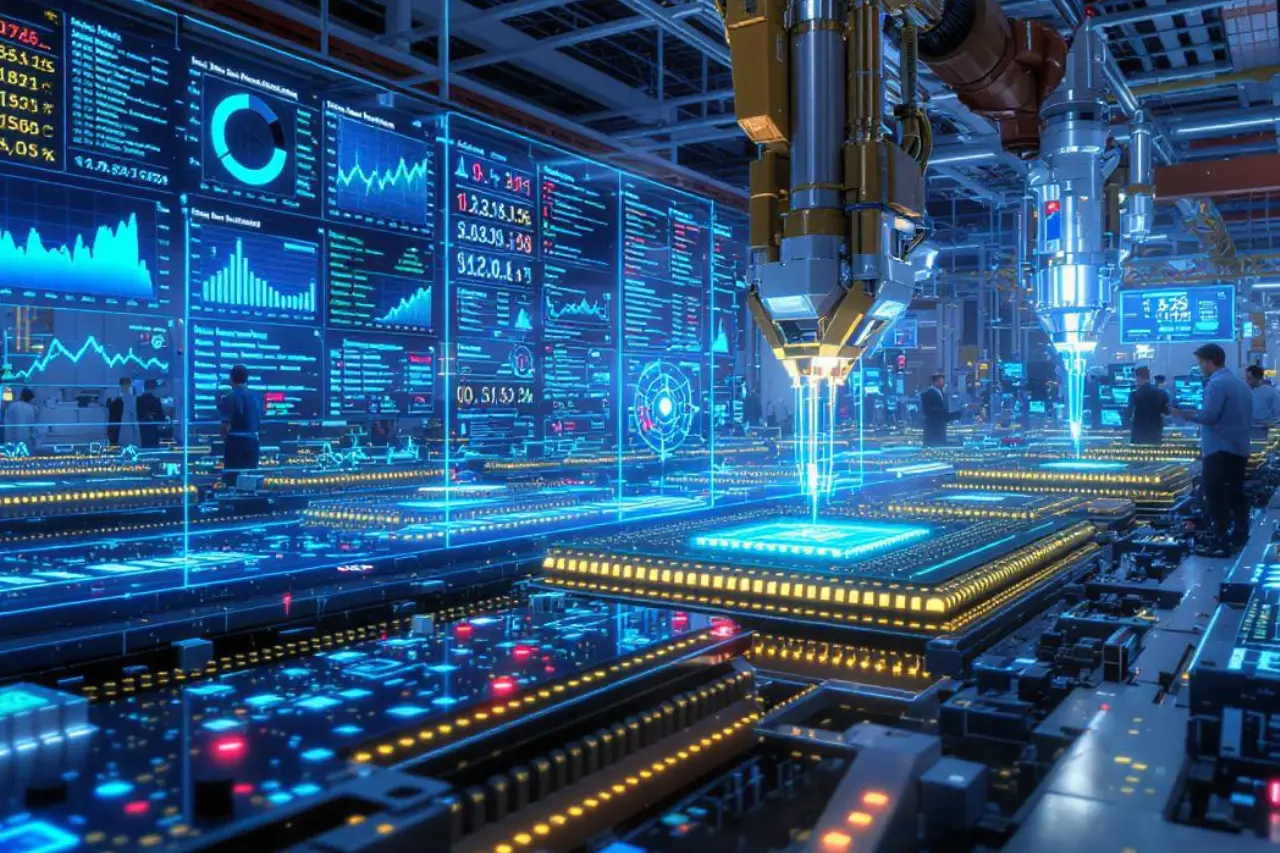
The global race to secure leadership in artificial intelligence has placed semiconductor manufacturing at the center of economic and technological strategy. In recent years, governments and technology companies have intensified efforts to build stronger domestic chip production capabilities. As a result, the American Made AI Chip Drive has emerged as a significant force shaping investment decisions across the semiconductor industry.
The United States has increasingly prioritized local manufacturing to strengthen supply chain resilience, reduce dependence on overseas production, and support national competitiveness in advanced technologies. While these goals offer long term benefits, they also create financial challenges for major chip manufacturers that must balance expansion costs with profitability expectations.
Why TSMC Faces Margin Pressure
Taiwan Semiconductor Manufacturing Company, widely known as TSMC, remains one of the most important players in the global semiconductor ecosystem. The company produces advanced chips used in artificial intelligence systems, data centers, smartphones, and high performance computing applications.
However, the American Made AI Chip Drive requires substantial investment in manufacturing facilities within the United States. Building and operating advanced fabrication plants in America typically involves higher labor costs, infrastructure expenses, and regulatory requirements compared with some existing manufacturing locations.
Consequently, these additional costs can place pressure on operating margins. Although demand for advanced AI chips continues to grow, profitability may face short term constraints as new facilities ramp up production and achieve operational efficiency.
The Strategic Importance of Local Manufacturing
Despite margin concerns, domestic semiconductor production offers strategic advantages. Governments and businesses have become increasingly aware of vulnerabilities within global supply chains following recent disruptions. Therefore, expanding local production capabilities is viewed as an essential step toward improving resilience.
Furthermore, advanced AI chips have become critical infrastructure for emerging technologies. From cloud computing platforms to autonomous systems, organizations depend on reliable access to cutting edge semiconductor technology. As a result, investments driven by the American Made AI Chip Drive are often seen as long term commitments rather than short term financial decisions.
Moreover, policymakers believe that stronger domestic manufacturing can stimulate innovation, create skilled jobs, and support broader economic growth.
How the AI Boom Is Influencing Semiconductor Economics
Artificial intelligence continues to reshape the technology landscape at an extraordinary pace. Demand for advanced processors has surged as businesses adopt increasingly sophisticated AI applications. This trend has created new opportunities for semiconductor manufacturers while also intensifying competition.
At the same time, AI trends and insights reveal that organizations are investing heavily in infrastructure capable of supporting large scale AI workloads. High performance chips remain essential for training and deploying modern artificial intelligence models.
Meanwhile, Machine learning advancements are driving demand for specialized processors optimized for complex computational tasks. These innovations require substantial manufacturing expertise, making companies like TSMC central to the future of AI development.
Balancing Growth and Profitability
One of the biggest challenges facing semiconductor leaders today is balancing strategic expansion with financial performance. Investors generally support long term growth initiatives, yet they also closely monitor profitability metrics.
Therefore, companies investing in domestic manufacturing must carefully manage costs while maintaining production quality and technological leadership. Although new facilities can initially affect margins, successful execution may ultimately strengthen competitive positioning.
In addition, government incentives and policy support may help offset some financial pressures associated with large scale manufacturing investments. Consequently, the long term impact on profitability may differ significantly from short term market expectations.
The Broader Impact on the Technology Industry
The influence of the American Made AI Chip Drive extends far beyond semiconductor manufacturers. Technology companies developing artificial intelligence platforms, cloud services, and enterprise software all depend on reliable access to advanced chips.
Likewise, Generative AI developments continue to increase demand for powerful computing resources. As organizations deploy increasingly sophisticated AI models, semiconductor supply becomes a critical factor in innovation and scalability.
Furthermore, Automation and future tech initiatives across industries rely heavily on advanced processors. From intelligent manufacturing systems to autonomous transportation solutions, the availability of cutting edge chips directly affects the pace of technological progress.
What Industry Leaders Are Watching
Technology executives and investors are closely monitoring how manufacturing expansion efforts unfold over the coming years. Several factors will likely determine whether current investments deliver their intended outcomes.
First, production efficiency will play a significant role in managing costs and protecting profitability. Second, sustained demand for AI infrastructure will influence revenue growth across the semiconductor sector. Third, geopolitical developments may continue shaping supply chain strategies and manufacturing priorities.
At the same time, AI industry updates suggest that collaboration between governments and private sector organizations will remain essential for achieving long term objectives. Such partnerships could help accelerate innovation while supporting domestic production capabilities.
The Future Outlook for AI Chip Manufacturing
Looking ahead, the semiconductor industry appears poised for continued transformation. The expansion of domestic manufacturing represents a major shift in how technology infrastructure is developed and distributed worldwide.
Additionally, Future of AI research points toward increasingly advanced applications that will require even greater computing power. This trend is expected to sustain strong demand for high performance chips despite ongoing cost challenges.
While margin pressure remains a concern for manufacturers investing in new facilities, the broader opportunity created by artificial intelligence may outweigh short term financial constraints. Ultimately, success will depend on a company’s ability to innovate, scale production efficiently, and adapt to evolving market conditions.
Key Insights for Technology Leaders
Organizations should view semiconductor manufacturing trends as an important indicator of the future technology landscape. Rising investment in domestic production reflects a broader shift toward resilience, innovation, and strategic control of critical infrastructure. Business leaders should monitor developments in AI chip manufacturing, supply chain diversification, and emerging policy initiatives to better understand how these factors may influence technology adoption and competitive advantage in the years ahead.
AITechInfoPro delivers timely analysis and expert perspectives on the technologies shaping tomorrow’s digital economy. Connect with AI Tech Info Pro today to gain deeper insights into artificial intelligence, innovation trends, and the future of advanced technology.